V18N1 (enero 2027)
Deadline: July 1st, 2026
Submission by clicking here

Revista Mediterránea de Comunicación / Mediterranean Journal of Communication invites submissions for the monograph Sexist and Misogynist Narratives: Strategies for challenging them, coordinated by Dr. Charo Lacalle (Universidad Autónoma de Barcelona, Spain), Dr. María Antonia Paz (Universidad Complutense de Madrid, Spain), Dr. Giuseppina Bonerba (Università di Perugia, Italy) and Dr. Mireya Vicent (Universidad de Burgos, Spain), to be published in January 2027 (V18N1). Deadline for receipt of articles: July 1st, 2026.
Sexist and Misogynistic Narratives: Strategies to challenge them
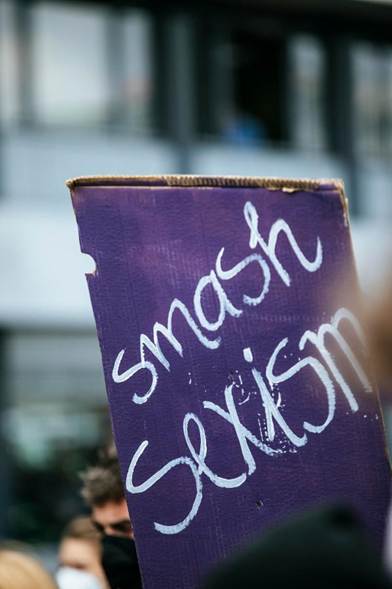
Fuente: Markus Spiske (@markusspiske)
Hate speech in the digital media is particularly harmful not only to degraded people, but also to society as a whole, because it fosters stereotypical attitudes and aggravates intergroup relations. Efforts by legislators, social media managers, and the media to eliminate these expressions have proven insufficient. This can be seen in the growth of the Manosphere, a fragmented group of digital communities that promote misogynistic discourses from a victimized perspective of male identity (Han & Yin, 2023). Of particular concern is that the various identities—Men’s Rights Activists, Men Going Their Own Way, Pick Up Artists, and Incels (Ging, 2019)—are made up not only of adult men but especially of young men (Zugasti-Hervás, 2022), and that these subcultures are joined by anti-feminist communities with far-right ideologies (Lacalle, Martín-Jiménez & Etura-Hernández, 2023; Juárez-Miro & Toff, 2022). Furthermore, these identities are constantly evolving (Kyparissiadis & Skoulas, 2021), though not in isolation. That is to say, there is a feedback loop through various echo chambers (Krendel et al., 2022). Therefore, the influence of this ecosystem in the real world constitutes a genuine threat (Ebner, 2021).
This special issue aims to consolidate research on the recognition of ‘dominant narratives’ in sexist and misogynistic expressions. We invite contributions that identify the characteristics of these written, visual, and audiovisual discourses within their respective online contexts, and that help to understand the behavior and interactions that are established among users participating in these conversations (ethnographic studies). Finally, this call welcomes studies that propose counter-reply strategies that might be able to challenge these negative arguments and stereotypes through various methods (including, but not limited to, machine-learning algorithms).
The lines of research that would be possible to pursue are:
- The dominant narratives of the various identities within the Manosphere in forums and social networks.
- Sexist and misogynistic expressions in different media (film, television, digital press).
- Sexism in public discourse and political representations.
- The antifeminism of the far-right in different countries.
- The potential of AI to detect and/or respond to misogynistic and sexist expressions.
- Strategies to encourage user responses to mitigate the impact and support of such hate speech.
Funded by: “Challenging online narratives of political hatred and misogyny” (ref. PID2023-147506OB-I00), funded by the Ministry of Science and Innovation, the State Research Agency (AEI) of the Government of Spain.
References
Ebner, J. (2021). Going dark: The secret social lives of extremists. London: Bloomsbury.
Ging, D. (2019). Alphas, betas, and Incels: Theorizing the masculinities of the Manosphere. Men and masculinities, v. 22, n. 4, pp. 638-657.
Han, X., & Yin, C. (2023). Mapping the manosphere. Categorization of reactionary masculinity discourses in digital environment. Feminist media studies, 23(5), 1923-1940.
Juárez-Miro, C. & Toff, B. (2022). How right-wing populists engage with cross-cutting news on online message boards: The case of ForoCoches and Vox in Spain. International journal of press/politics, 28(4), 770-790.
Krendel, A. et a. (2022). The representation of gendered social actors across five manosphere
communities on Reddit. Corpora, v. 17, n. 2, pp. 291-321.
Kyparissiadis, G. & Skoulas, E. (2021). Manosphere and manconomy: Divergent masculinities in the digital space. Ex-centric narratives: Journal of Anglophone Literature, Culture and Media, 5, 199-217.
Zugasti-Hervás, I. (2022). Habitar las redes sociales en igualdad: nuevos usos y buenas prácticas. Revista de estudios de juventud, n. 125, pp. 139-149.
 Observatorio de Ficción Española y Nuevas Tecnologías